
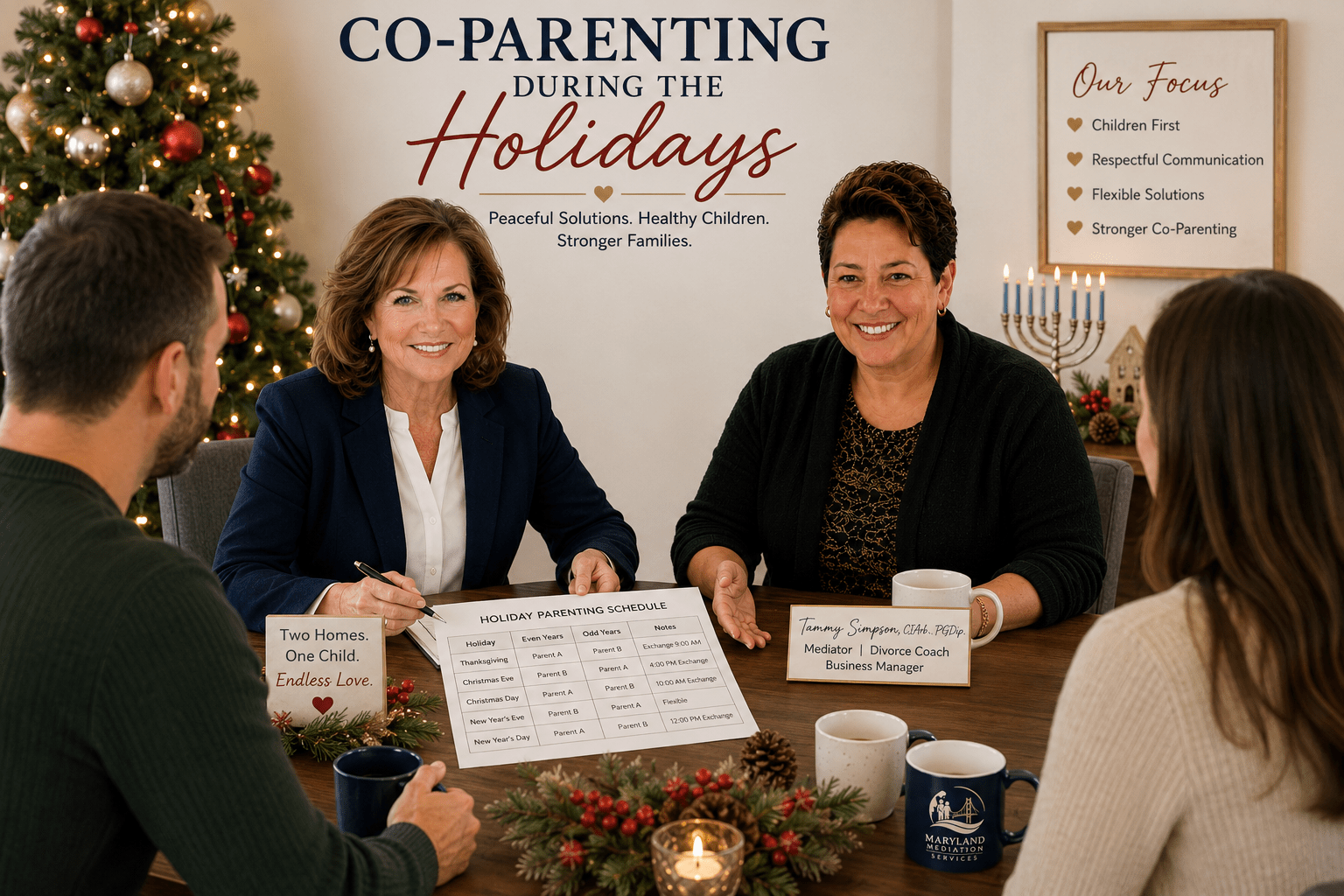
Co-Parenting During the Holidays: Expert Tips for Creating Peaceful Holiday Traditions After Divorce
The holidays should be a time of celebration, connection, and lasting memories. However, for divorced or separated parents, the season often brings added stress, emotional challenges, and complicated parenting schedules. Co-parenting during the holidays requires thoughtful planning, respectful communication, and a shared commitment to putting children first.
Although holiday parenting may look different after separation or divorce, it can still be meaningful and joyful. With the right parenting plan, healthy communication, and flexibility, children can enjoy positive experiences with both parents while feeling secure and loved.
At Maryland Mediation Services, we help parents throughout Maryland develop practical parenting plans, resolve holiday scheduling conflicts, and strengthen co-parenting relationships through mediation, parenting coordination, and divorce coaching.
Why Holiday Co-Parenting Can Be Challenging
The holiday season often brings heightened emotions. Parents may grieve lost traditions, worry about missing time with their children, or disagree about schedules and celebrations. At the same time, children often feel anxious about dividing time between two homes.
Fortunately, planning ahead and maintaining child-focused communication can significantly reduce stress.
Instead of focusing on what has changed, parents can work together to create new traditions that support their children’s emotional well-being.
Understanding Holiday Parenting Plans
A comprehensive parenting plan should clearly outline holiday schedules before the season begins. Doing so helps reduce misunderstandings and prevents unnecessary conflict.
Most parenting plans address:
Alternating Holidays
Parents alternate major holidays each year, allowing children to enjoy meaningful time with both families over time.
Splitting the Holiday
Some parents divide the holiday into morning and evening parenting time.
Fixed Holiday Schedules
Certain holidays remain with one parent because of long-standing family traditions, religious observances, or extended family gatherings.
Celebrating on Different Days
Children often enjoy celebrating holidays twice.
Many families celebrate Christmas, Thanksgiving, birthdays, or other special occasions on different days rather than the calendar date itself.
Consequently, children gain additional memories instead of feeling they missed a celebration.
Seven Expert Tips for Successful Co-Parenting During the Holidays
1. Plan Early
Begin discussing holiday schedules at least two months before the holidays.
Early planning allows both parents to coordinate travel, extended family gatherings, school activities, and work schedules.
2. Keep Communication Respectful
Children benefit when parents communicate calmly.
Use email, text messages, or co-parenting apps to keep conversations organized and focused on parenting decisions.
3. Focus on Your Child’s Needs
Before making decisions, ask yourself:
“What arrangement helps my child feel safe, loved, and supported?”
This simple question often changes the direction of difficult conversations.
4. Create New Family Traditions
Instead of trying to recreate the past, embrace new traditions.
Children often remember quality time together more than specific holiday dates.
5. Coordinate Gift Giving
Discuss major gifts before shopping.
Working together reduces duplicate purchases while preventing unnecessary competition.
6. Prepare for Travel
If holiday travel is involved:
- Review your parenting plan.
- Obtain required written permissions.
- Share itineraries.
- Exchange emergency contact information.
Good planning helps avoid unnecessary misunderstandings.
7. Stay Flexible
Unexpected weather, illness, or travel delays happen.
Parents who remain flexible often reduce stress for everyone—especially their children.
Why Parenting Coordination Can Help
Holiday disagreements often escalate quickly.
Rather than returning to court, many families work with a Parenting Coordinator who helps resolve disputes in real time.
Parenting coordination allows parents to:
- Improve communication
- Resolve holiday scheduling disputes
- Clarify parenting plans
- Reduce conflict
- Keep children out of adult disagreements
Susan Buckingham, LMSW, serves as an experienced Parent Coordinator and helps Maryland families find practical solutions quickly—often without the expense and delay of litigation.
Why Choose Maryland Mediation Services?
Our experienced team understands that successful co-parenting involves much more than following a schedule.
We help parents build healthier communication, reduce conflict, and create child-centered parenting plans that support children throughout the year.
Our team includes:
- Susan Buckingham, LSW — Mediator, Parent Coordinator, Divorce Coach
- Tammy Simpson, CIArb., PGDip. — Mediator, Divorce Coach, Business Manager
Together, we help Maryland families create peaceful holiday experiences while protecting long-term family relationships.
Frequently Asked Questions
What should a holiday parenting plan include?
Holiday schedules should address major holidays, school breaks, birthdays, vacations, transportation, travel, and communication expectations.
What if we cannot agree on holiday schedules?
Mediation or parenting coordination can help parents resolve disagreements without returning to court.
Can holiday parenting schedules be modified?
Yes. Parents may agree to temporary changes or formally modify parenting plans when circumstances change.
Should children choose where they spend the holidays?
Parents should avoid placing children in the middle of adult decisions. Instead, parents should work together to create schedules that support the children’s emotional wellbeing.





No comment